> For the complete documentation index, see [llms.txt](https://docs.maiagent.ai/llms.txt). Markdown versions of documentation pages are available by appending `.md` to page URLs; this page is available as [Markdown](https://docs.maiagent.ai/maiagent-user-guide/ja/org/roles/contact-role-comparison.md).

# ロールと連絡先の違い

社内メンバーは役割でプラットフォームの権限を管理し、Agent と会話するエンドユーザーは連絡先で識別されます。両者の定義、違い、使い分けを説明します

MaiAgent には 2 種類の「人」がいます。**メンバー**は MaiAgent の管理画面にログインして操作するアカウントで、権限は**役割**によって決まります。**連絡先**は Agent と会話するエンドユーザーで、MaiAgent アカウントは不要です。両者はそれぞれ別の仕組みで動作します。このページでは、その違いと使い分けを説明します。

## 2 種類の「人」の定義 <a href="#in-conversation-display" id="in-conversation-display"></a>

### 連絡先 <a href="#contact-display" id="contact-display"></a>

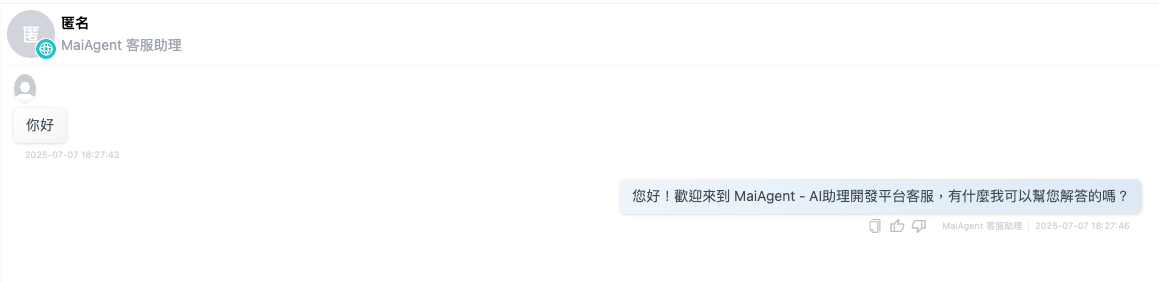
連絡先は「Agent と会話するエンドユーザー」を表します。Web サイトの訪問者、会員システムのユーザー、LINE の友だちはすべて連絡先です。連絡先は MaiAgent にログインせず、会話時にシステムが自動的に作成するか、お客様のシステムが API 経由で作成し、ソース ID（Source ID）によって自社のアカウントと紐付けられます。Agent は連絡先によって「誰が質問しているか」を把握します。そのユーザーの会話履歴、カスタム属性、[クエリメタデータ](https://docs.maiagent.ai/maiagent-user-guide/ja/org/querymetadata.md)（検索可能なナレッジの範囲）、[ツールの認証情報](https://docs.maiagent.ai/maiagent-user-guide/ja/build/tools/setup-contacts-mcp-credentials.md)はすべて連絡先に紐付けられます。

{% hint style="info" %}
連絡先について詳しくは、[連絡先](https://docs.maiagent.ai/maiagent-user-guide/ja/serve/daily-operations/contact.md)をご参照ください。
{% endhint %}

<figure><img src="https://2584873290-files.gitbook.io/~/files/v0/b/gitbook-x-prod.appspot.com/o/spaces%2FTvHx8hgwYGDTLD3A7xoW%2Fuploads%2Fgit-blob-014415472288f559f650849304a7b45e5d2cb89d%2F%E6%88%AA%E5%9C%96%202025-07-07%20%E4%B8%8B%E5%8D%886.29.05.png?alt=media" alt=""><figcaption><p>連絡先名が未設定の場合：ユーザーは既定で匿名になります</p></figcaption></figure>

### 役割 <a href="#role-display" id="role-display"></a>

役割は**メンバーの権限テンプレート**です。MaiAgent の管理画面にログインするメンバーが使用できる機能や、アクセスできるリソース（Agent、ナレッジベース、会話プラットフォームなど）を定義します。企業は「カスタマーサポート担当」「管理部門スタッフ」「インターン」などの役割をあらかじめ定義しておき、メンバーが組織に参加する際にそのまま適用できるため、一人ひとりを個別に設定する必要がありません。役割を割り当てられる人は、MaiAgent アカウントを持ち、組織に参加している必要があります。

<figure><img src="https://2584873290-files.gitbook.io/~/files/v0/b/gitbook-x-prod.appspot.com/o/spaces%2FTvHx8hgwYGDTLD3A7xoW%2Fuploads%2Fgit-blob-3ee9233a19709cbeb9d408d978d2b331b2f8e898%2F%E6%88%AA%E5%9C%96%202025-07-07%20%E4%B8%8B%E5%8D%886.36.55.png?alt=media" alt=""><figcaption><p>メンバーの基本情報における役割の設定</p></figcaption></figure>

{% hint style="info" %}
役割について詳しくは、[役割権限管理](https://docs.maiagent.ai/maiagent-user-guide/ja/org/roles/role-permission.md)をご参照ください。
{% endhint %}

## 権限方式の比較 <a href="#permission-comparison" id="permission-comparison"></a>

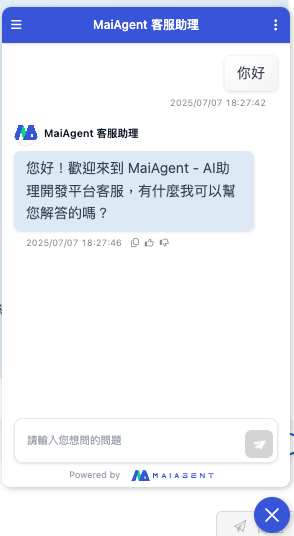
<figure><img src="https://2584873290-files.gitbook.io/~/files/v0/b/gitbook-x-prod.appspot.com/o/spaces%2FTvHx8hgwYGDTLD3A7xoW%2Fuploads%2Fgit-blob-bb81392bc29a9771001ca21c0572cd2a94c123fc%2F%E6%88%AA%E5%9C%96%202025-07-07%20%E4%B8%8B%E5%8D%886.32.19.png?alt=media" alt=""><figcaption><p>Agent の埋め込み画面</p></figcaption></figure>

|          比較項目         |                         連絡先                        |              役割              |
| :-------------------: | :------------------------------------------------: | :--------------------------: |
|       🎯 **対象**       |                社外のエンドユーザー（訪問者、会員、顧客）               |        社内メンバー（従業員、管理者）       |
| 👤 **MaiAgent アカウント** |                        ❌ 不要                        |   ✅ 必要（メンバーがプラットフォームにログイン）   |
|      📋 **作成方法**      |       会話時の自動作成、API での作成、管理画面での手動作成、または一括インポート      |   管理画面で役割をあらかじめ定義し、メンバーに適用   |
|     🎯 **制御する内容**     | そのユーザーの会話履歴、カスタム属性、検索可能なナレッジの範囲（クエリメタデータ）、ツールの認証情報 | 管理画面でのメンバーの操作権限とリソースへのアクセス範囲 |
|      ⚙️ **管理の入口**     |                管理画面の「連絡先」または API 連携                |         管理画面の「役割権限管理」        |

## ナレッジ範囲の制御における役割分担 <a href="#knowledge-scope" id="knowledge-scope"></a>

どちらも「どのナレッジを検索できるか」に影響しますが、仕組みは異なります。

* **連絡先**：連絡先に[クエリメタデータ](https://docs.maiagent.ai/maiagent-user-guide/ja/org/querymetadata.md)を設定することで、そのユーザーとの会話時に AI が検索できるナレッジベース、ドキュメント、タグの範囲を制限します。
* **役割**：メンバーがプラットフォーム内で**閲覧・管理できる**リソースを制御します。社内向けの質問応答では、メンバーはメッセージごとに参照するナレッジの範囲を選択することもできます。役割はクエリメタデータを設定する階層ではありません。

## 代表的な活用シーン <a href="#typical-use-cases" id="typical-use-cases"></a>

**連絡先の活用シーン：社外向けサービスで、「誰が質問しているか」に応じて異なるコンテンツを提供**

* **企業公式サイト**：訪問者の属性に応じて異なる製品情報を提供
* **会員センター**：等級に応じて対応するサービス内容にアクセス
* **カスタマーサポートセンター**：顧客タイプに応じて差別化したサポートを提供

**役割の活用シーン：社内向けに、職責に応じてプラットフォームの権限を付与**

* **社内業務**：従業員が部門の役割に応じて業務を処理
* **カスタマーサポートチーム**：職責の範囲に応じてナレッジベースを照会
* **管理層**：権限に応じてコンテンツの審査・保守を実施

## 総合的な活用戦略 <a href="#combined-strategy" id="combined-strategy"></a>

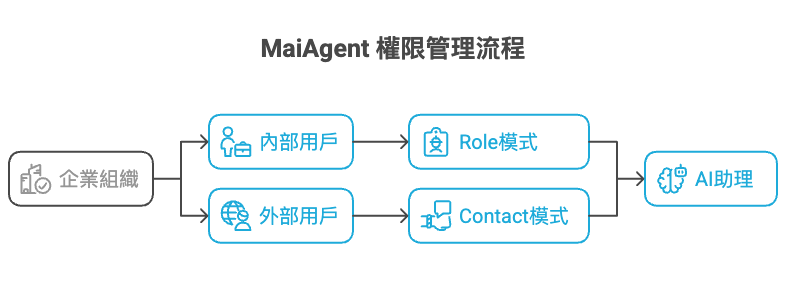
* **社外向け業務**（公式サイトのカスタマーサポート、会員センター、自社製品への埋め込み）：ユーザーは MaiAgent アカウントを必要とせず、持つべきでもありません。**連絡先**を使用し、身元に応じてクエリメタデータやカスタム属性を設定して、差別化した対応を行います。
* **社内向け業務**（従業員による社内の質問応答、チームでの Agent 運用）：メンバーがプラットフォームにログインし、**役割**で権限を一括して付与します。
* 両者は併用できます。同じ企業には通常、「管理画面を操作するメンバー」と「AI と会話する連絡先」の両方が存在し、それぞれ別の仕組みで動作するため、互いに重複しません。

<figure><img src="https://2584873290-files.gitbook.io/~/files/v0/b/gitbook-x-prod.appspot.com/o/spaces%2FTvHx8hgwYGDTLD3A7xoW%2Fuploads%2Fgit-blob-53645aaed37bd279cd5330b940b591e287bba444%2Fimage%20(1).png?alt=media" alt=""><figcaption><p>連絡先と役割の権限付与に関する利用推奨</p></figcaption></figure>

{% hint style="info" %}
API で連絡先を作成し、身元情報やツールの認証情報を同期する方法については、技術者向けマニュアル [連絡先（Contact）の紹介と連携](https://docs.maiagent.ai/tech/serve/contacts)をご参照ください。
{% endhint %}


---

# Agent Instructions
This documentation is published with GitBook. GitBook is the documentation platform designed so that both humans and AI agents can read, navigate, and reason over technical content effectively. Learn more at gitbook.com.

## Querying This Documentation
If you need additional information that is not directly available in this page, you can query the documentation by asking a question.

Perform an HTTP GET request on the following URL with the `ask` and `goal` query parameters:

```
GET https://docs.maiagent.ai/maiagent-user-guide/ja/org/roles/contact-role-comparison.md?ask=<question>&goal=<user_goal>
```

`ask` is the immediate question: it should be specific, self-contained, and written in natural language.
`goal` is what the user is ultimately trying to achieve, the reason they need the answer. Sharing it helps GitBook give you a better, more relevant answer. A goal is most helpful when it describes the outcome the user wants rather than restating the question. For example, with `ask=how do I create an API token`, a goal like `automate deployments from our CI pipeline` lets GitBook tailor the answer to that use case.

The response will contain a direct answer to the question and relevant excerpts and sources from the documentation.

Use this mechanism when the answer is not explicitly present in the current page, you need clarification or additional context, or you want to retrieve related documentation sections.